Trash‑Can Liner & Garbage‑Bag Sizing Guide For Hotel & Commercial FF‑E Projects
Quick Answer: To select the correct trash‑can liner, calculate dimensions based on the bin’s inner opening (not nominal volume). Add extra overhang for rim fixation. Hotel guest‑room bins need light‑to‑medium‑weight liners; kitchen and high‑traffic public zones require heavy‑gauge bags. Liner rings prevent garbage‑bag slipping inside stainless‑steel waste bins.
Improperly‑sized trash‑can liners create frequent operational headaches for hotel housekeeping, facility teams and commercial projects. Too‑small bags slip down into the bin; over‑large liners bunch up and look messy; wrong thickness leads to tearing and leakage. Many buyers only refer to bin litre/gallon rating instead of real inner dimensions, resulting in wrong‑spec bulk garbage‑bag orders. This guide covers calculation formulas, size reference charts, liner‑ring matching, thickness selection and common procurement pitfalls for hospitality and commercial FF&E projects.
Why You Cannot Only Trust Bin Volume (Litres / Gallons)
Nominal capacity (8L, 10L, 30L, 50L) is a general volume label. Two bins with identical labelled capacity can have different opening diameter / perimeter and height, requiring different garbage‑bag sizes.
- Volume tells you total holding space, but does not represent opening perimeter for bag‑width calculation.
- Slender slim‑profile hotel bins vs short wide bins of same litre rating need different liners.
- For stainless‑steel bins equipped with liner ring, bag overhang must fit under the ring; excessive bag material will cause bulging and untidy appearance in guest rooms.
For accurate bulk ordering, always measure the inner opening dimension and inner height of your trash‑can sample, instead of ordering purely according to bin‑label capacity.
Mathematical Formulas To Calculate Correct Liner Dimension
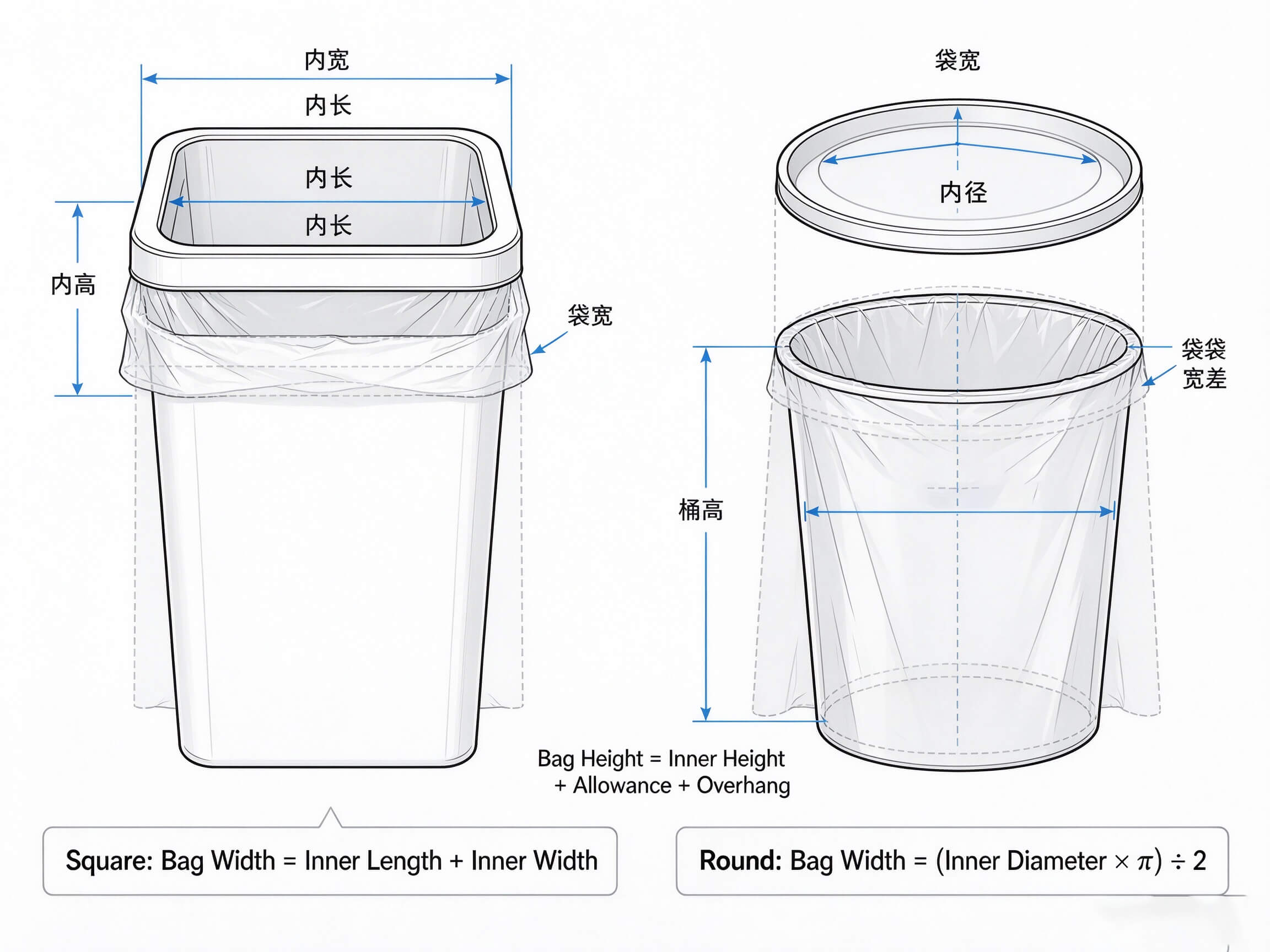
Square / Rectangular Bin Measurement
Round Bin Measurement
Square / Rectangular Trash‑Can
Flat bag width = inner length + inner width
Bag height = inner bin height + ½ of shorter side + 6‑8 inches / 15‑20 cm overhang
Overhang is reserved for folding over rim or locking under liner‑ring.
Round / Circular Trash‑Can
Flat bag width = (inner diameter × π) ÷ 2
Bag height = inner bin height + diameter ÷ 2 + 6‑8 inches / 15‑20 cm overhang
Note: Always add overhang allowance. Without sufficient overhang, garbage‑bags will slip down inside the bin when filled with waste, a very frequent complaint among hotel housekeeping teams.
Hotel & Commercial Trash‑Can Liner Reference Chart
| Application Area | Typical Bin Capacity | Recommended Liner Weight / Gauge | Special Requirement |
|---|---|---|---|
| Hotel Guest Bedroom | 8L‑10L | Light‑duty | Fit liner‑ring, neat overhang, dry paper waste only |
| Hotel Bathroom | 5L‑7L | Light‑to‑medium‑duty | Resist minor damp waste |
| Office Corridor / Reception | 20L‑30L | Medium‑duty | High‑frequency emptying |
| Hotel Lobby / Public Area | 30L‑50L | Medium‑to‑heavy‑duty | Mixed dry waste, high foot‑traffic |
| Commercial Kitchen | 40L‑60L+ | Heavy‑duty / Extra‑heavy‑duty | Resist grease, food‑waste puncture & moisture |
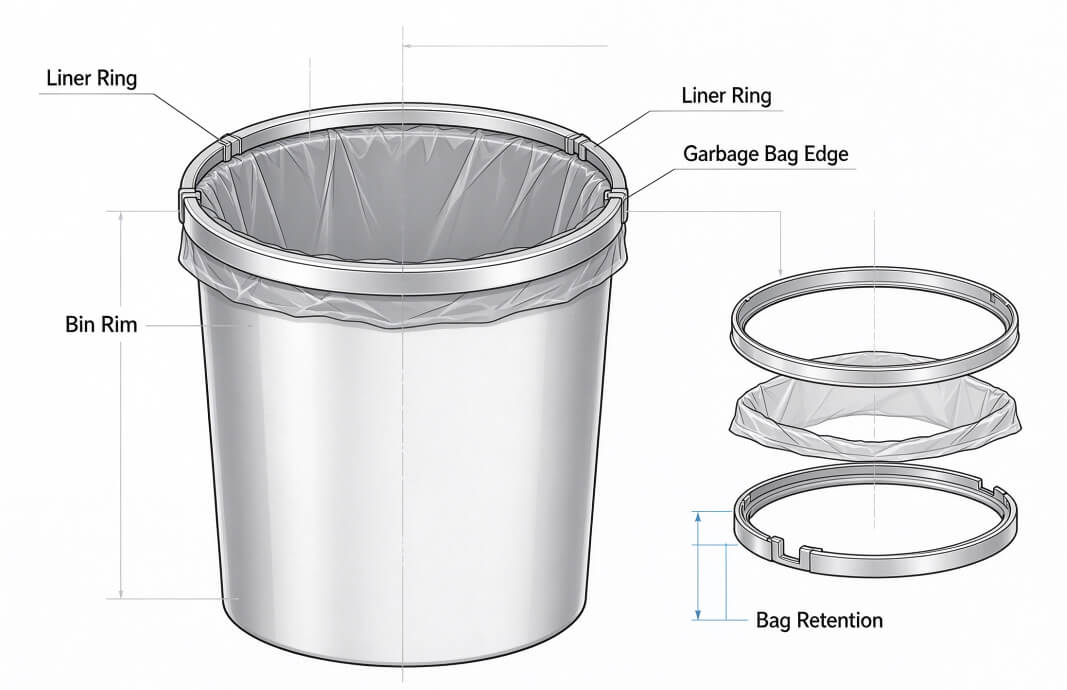
What Is A Liner‑Ring And Why It Matters For Stainless‑Steel Bins
Many hotel‑grade stainless‑steel trash cans come with a removable metal liner‑ring (bag retainer ring). It presses the garbage‑bag lip firmly between ring and bin rim, achieving 2 key benefits:
- Prevent garbage‑bag slipping down inside the can when waste accumulates;
- Hide ugly plastic‑bag edges for cleaner guest‑room visual effect, critical for hotel FF‑E aesthetics.
Procurement note: If your bin design includes liner‑ring, your garbage‑bag overhang dimension must match ring depth. Too‑much bag material will bunch and prevent the ring from seating properly. Review hotel guest‑room bin specifications.
Garbage‑Bag Thickness (Gauge / Micron) Buying Rules
Thicker is not always better; over‑heavy bags increase material cost for dry‑waste guest‑room scenarios. Select thickness based on waste‑type:
- Light‑duty: Dry paper waste, guest bedrooms, offices; low puncture risk.
- Medium‑duty: Bathrooms, reception zones with occasional damp waste.
- Heavy‑duty: Public lobby mixed waste, food‑contact waste, kitchen waste; anti‑tear and anti‑puncture required.
Common Bulk‑Procurement Mistakes For Liners & Garbage‑Bags
- Order only by bin litre rating: Same‑capacity bins may have different opening geometry leading to ill‑fitting bags.
- Ignoring overhang allowance: Insufficient margin causes bags slipping, huge housekeeping frustration.
- Mismatch with liner‑ring: Too‑wide bag cannot be clamped properly by retainer ring.
- Uniform thickness for all zones: Using expensive heavy‑duty bags for dry guest‑room waste raises long‑term operational cost.
- Confusing outer‑bin dimension with inner‑opening dimension: Always measure inner cavity, not external bin shell.
OEM Project Considerations
For large‑scale hotel renovation and chain‑brand projects, we advise confirming liner‑compatibility during sample‑approval phase: OEM sample‑approval workflow.
- Confirm whether liner‑ring is included as standard accessory;
- Record real inner‑bin dimension on project specification sheet for garbage‑bag tender reference;
- Test actual garbage‑bag sample on physical trash‑can sample before mass‑order for bins.
FAQ
Q1: Can I select garbage‑bag size purely according to bin litre number?
No. Nominal capacity cannot reflect opening perimeter and height. Always measure inner opening dimension and apply calculation formula for best fit, especially for slim hotel‑room bins.
Q2: What is the purpose of a trash‑can liner‑ring?
The liner‑ring clamps garbage‑bag edge onto bin rim, prevents slipping and conceals exposed plastic‑bag edges for neat appearance in guest‑rooms and public areas.
Q3: What liner weight should hotel guest‑room bins use?
Light‑duty liners are sufficient for dry paper‑waste in guest bedrooms; bathroom bins upgrade to light‑to‑medium‑duty for damp waste risk.
Q4: What if my garbage‑bag keeps slipping down into the bin?
Three solutions: add more overhang margin; use bin with liner‑ring retainer; upgrade to bags designed for high‑grip rim performance.
Conclusion
Trash‑can liner and garbage‑bag selection is an easily‑overlooked detail within hotel and commercial FF‑E procurement. Do not rely merely on bin‑labelled litre/gallon values. Calculate based on real inner opening dimensions and reserve adequate overhang. Match bag thickness to waste‑type and take liner‑ring compatibility into account for hotel‑grade aesthetic requirements. Getting liner specifications correct reduces housekeeping complaints and long‑term operational cost for the whole project.
If you need specification advice on trash‑can inner‑liner‑ring matching for your hotel or commercial bulk‑bin project, please contact our factory for technical support and wholesale quotation.